
Running a landscape design and construction business means I get a front-row seat to people’s dreams for their outdoor spaces — and sometimes, to their frustrations too. Even when everyone has the best intentions, things can go sideways.
I recently had an experience that reminded me how crucial honest communication and clear expectations are. So I’m sharing some of the most common landscaping mistakes I’ve encountered— and how to avoid them. Whether you’re just starting to plan or already mid-project, I hope this helps you make confident, informed decisions and helps you get the most out of working with your contractor.
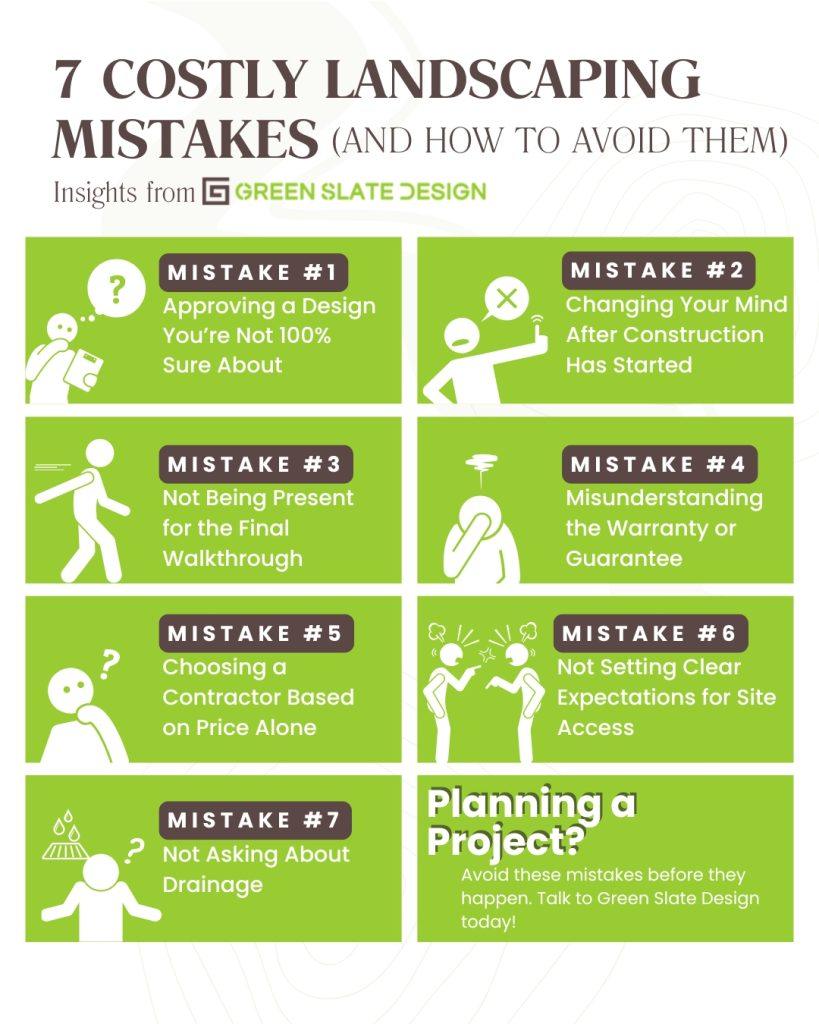
Mistake #1: Approving a Design You’re Not 100% Sure About
It’s easy to get caught up in the excitement of starting your project. Sometimes homeowners rush through the design phase just to get things moving. Maybe you’re trying to stick to a deadline or are just tired of going back and forth. Either way, signing off on a design before you’re truly confident can lead to problems later.
The Potential Outcome
You could end up locked into a layout or feature that doesn’t feel right once it’s built. I’ve had clients come back mid-construction asking to swap out materials or rearrange parts of the yard. But by that point, crews are scheduled, supplies are ordered, and work is already underway.
Making big changes after the fact usually means redoing work, throwing out materials, and dealing with delays — all of which add costs.
The Solution
Take your time during the design phase. This is the part where questions, edits, and second thoughts are expected and encouraged.
Ask for additional sketches or renderings if you need help visualizing something. Sit down with your contractor and talk through how you’ll actually use the space.
The goal isn’t just to make it look good, but to make sure it fits your needs. If something doesn’t make sense, speak up. You should never feel rushed into approving something you’re unsure about.
Mistake #2: Changing Your Mind After Construction Has Started
Designs are finalized, materials are ordered, and then…you realize you want to tweak something. It happens. Maybe you saw a new idea online or had second thoughts about a layout. But changing your mind once work has started isn’t as simple as just swapping things out.
The Potential Outcome
Even small adjustments can have a domino effect. Changing materials might mean new orders, updated permits, or redoing parts of what’s already been built.
I’ve had clients decide to switch stone types after installation began — it cost more, delayed the schedule, and created a lot of stress they hadn’t expected.
The Solution
If you’re considering changes, bring them up as early as possible. Talk it through with your contractor and get clarity on how the change could affect the budget and schedule.
Sometimes the answer is yes, but sometimes it means going back to square one. Most importantly, be open to feedback. A good contractor will help you weigh the pros and cons before making any big moves.
Mistake #3: Not Being Present for the Final Walkthrough
By the time a project wraps up, some homeowners are ready to move on. Maybe you’re busy, or you assume everything is fine. But skipping the final walkthrough is a missed opportunity to catch small details and get important information.
The Potential Outcome
You could miss things that need attention: a sprinkler head aimed the wrong way, a minor slope issue, or a spot where touch-up work is still needed.
More importantly, you might not know how to care for your new space. I’ve had people call weeks later asking about timers, drainage, or how to clean their pavers — things we would’ve covered in the walkthrough.
The Solution
Block out time to do a full walkthrough with your contractor. Walk the entire space together, ask questions, and take notes.
Learn how to use your irrigation system, understand what maintenance is expected, and make sure every part of the contract has been delivered. This is your last chance to speak up while the team is still onsite.
Mistake #4: Misunderstanding the Warranty or Guarantee
Warranties can get confusing, and most people assume that if something breaks or dies, it’ll just be replaced. But guarantees usually have limits and specific terms. Not knowing what’s covered can lead to surprises down the road.
The Potential Outcome
You might think a plant or feature is covered when it’s not. I’ve had clients call months later about a dead shrub or chipped concrete, assuming we’d replace it for free. But if it’s past the warranty period or the issue was caused by user error, we can’t always fix it without extra charges. That leads to frustration on both sides.
The Solution
Get your warranty in writing. Read through it and ask questions before the project is done. Understand what’s included and what’s not. We go over this during the walkthrough so our clients know exactly what to expect. Any contractor you hire should do the same.
Mistake #5: Choosing a Contractor Based on Price Alone
Everyone wants to save money. That’s understandable. But picking the lowest bid without looking deeper can set you up for disappointment.
Sometimes, a low bid is only possible because the contractor is using lower-quality materials, skipping important steps in the process, or underestimating labor. What’s worse, some won’t stick around when problems pop up.
The Potential Outcome
You might end up with poor workmanship, unreliable scheduling, and materials that don’t last. We’ve fixed patios that were sinking because they weren’t compacted properly, and lawns that flooded because grading was ignored.
In almost every case, the homeowners went with the cheapest bid, and it cost them double in the end.
The Solution
Compare more than numbers. Ask each contractor what their bid includes. What materials are they using? Who will be doing the work? What happens if something goes wrong?
Review photos of past projects and read their client reviews. Most importantly, trust your gut when you’re speaking with them. A slightly higher bid from a contractor who communicates clearly and stands behind their work is almost always worth the investment.
Mistake #6: Not Setting Clear Expectations for Site Access
We use big equipment, make large deliveries, and have full crews on site. Unfortunately, not every homeowner realizes how much space we actually need to do the job. Some think we can just work around whatever’s there — fences, cars, gates — without talking about it first. That’s usually when problems start.
Whether it’s a locked side gate, unclear parking rules, or kids and pets running through the work zone, site access can quickly turn into a headache if it’s not talked through up front.
The Potential Outcome
Delays, confusion, or even safety issues. If materials can’t be delivered to the right spot or equipment can’t reach the area we’re working on, your timeline could take a hit. And if pets escape or neighbors start complaining about trucks, it puts everyone in an uncomfortable spot, including you.
The Solution
Before construction starts, walk your contractor through the site. Talk about where crews can park, what gates or access points will be used, what hours are off-limits, and how deliveries will be handled.
Let us know if there are things we need to work around — like pool fences, locked sheds, or irrigation lines. Planning this ahead also helps maintain good relationships with neighbors and avoids complaints during the project.
Mistake #7: Not Asking About Drainage
Drainage isn’t something most homeowners think about during the planning phase — until there’s a problem. But in landscaping, it’s a big deal. Without proper water management, even the most beautiful yard can become a maintenance nightmare.
The Potential Outcome
You could end up with standing water, plant loss, or even water damage to your home or patio. I’ve been called to properties with patios that were completely flooded after a rain because the contractor didn’t grade them correctly.
The fix involved removing part of the hardscape, re-sloping the base, and reinstalling everything. This is something that could’ve been avoided with better planning up front.
The Solution
Bring up drainage early in the conversation. Ask your contractor how the yard will drain and where water will go during a heavy rain.
A thoughtful plan might include surface grading, French drains, swales, or other systems to keep water away from your home and structures. Drainage solutions are rarely visible once installed, so don’t assume they’re included unless you ask.
Even if it’s not the most exciting part of the project, it’s one of the most important. A good contractor will take it seriously — and explain the plan in plain language so you understand exactly what to expect.
Final Thoughts: Ask More Questions. Get Clear Answers.
Most landscaping mistakes don’t happen because of bad intentions. — they happen when expectations don’t match reality. As a contractor, I’ve learned the hard way that the more we talk through up front, the smoother everything goes.
Before your next project kicks off, ask yourself:
- Do I truly understand the design and layout?
- Have I reviewed the scope, materials, and warranty in detail?
- What happens if I need to make a change?
- Will I be involved from start to finish?
If any answer is unclear, don’t wait — ask. That simple step can save you time, money, and frustration.
A great landscaping experience is built on more than stone, plants, and wood. It’s built on clarity, trust, and honest communication.
Thinking about your next outdoor project? Let’s talk early and get it right the first time. At Green Slate Design, we believe in planning with purpose.